A marketplace where products don’t just get sold. They get discovered, discussed, and connected.
Industry
E-COmmerce
Role
Lead Product Manager & Product Designer
Platform
Mobile Application
Overview
The product was designed to make buying and selling pre-owned products more accessible while creating a more engaging experience around marketplace activity.
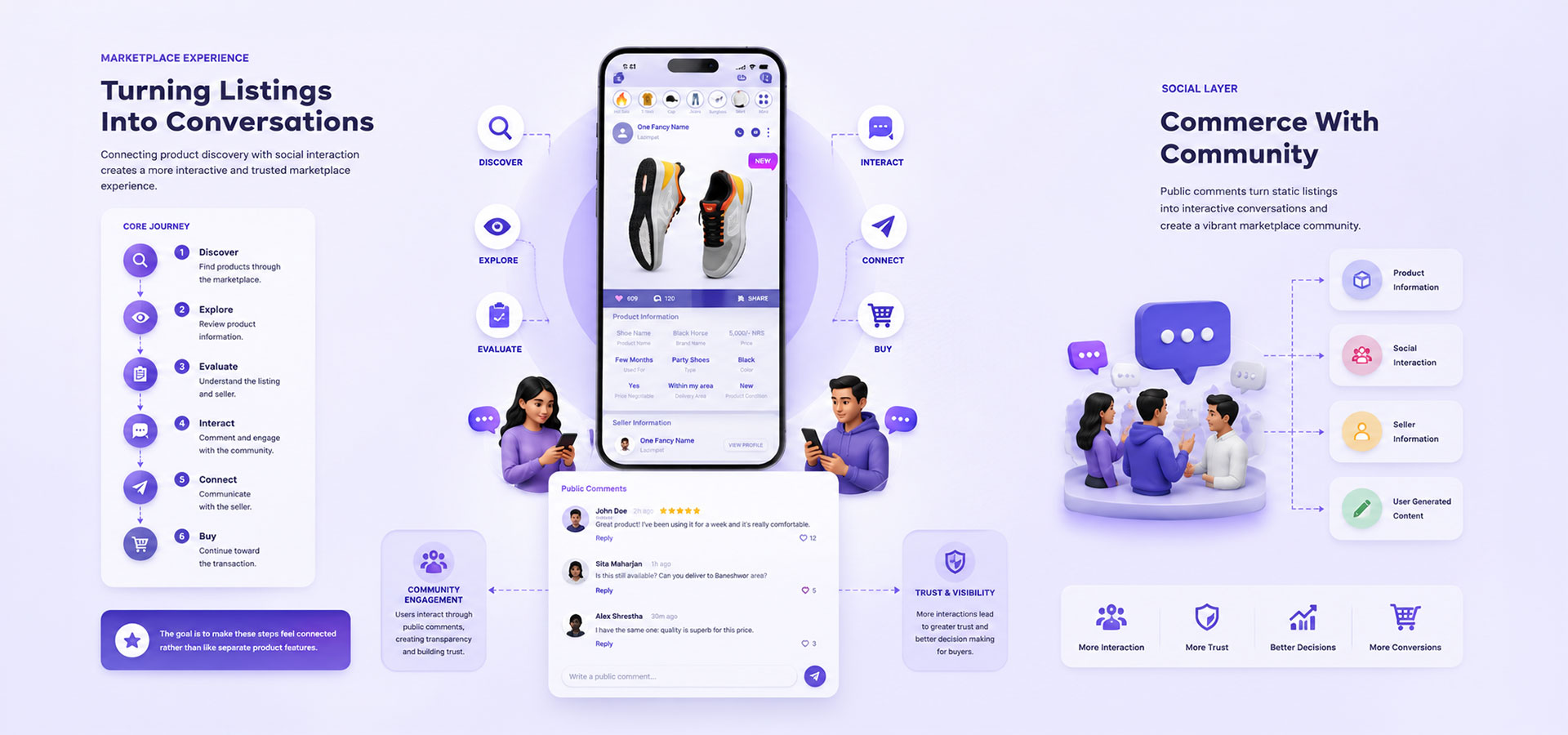
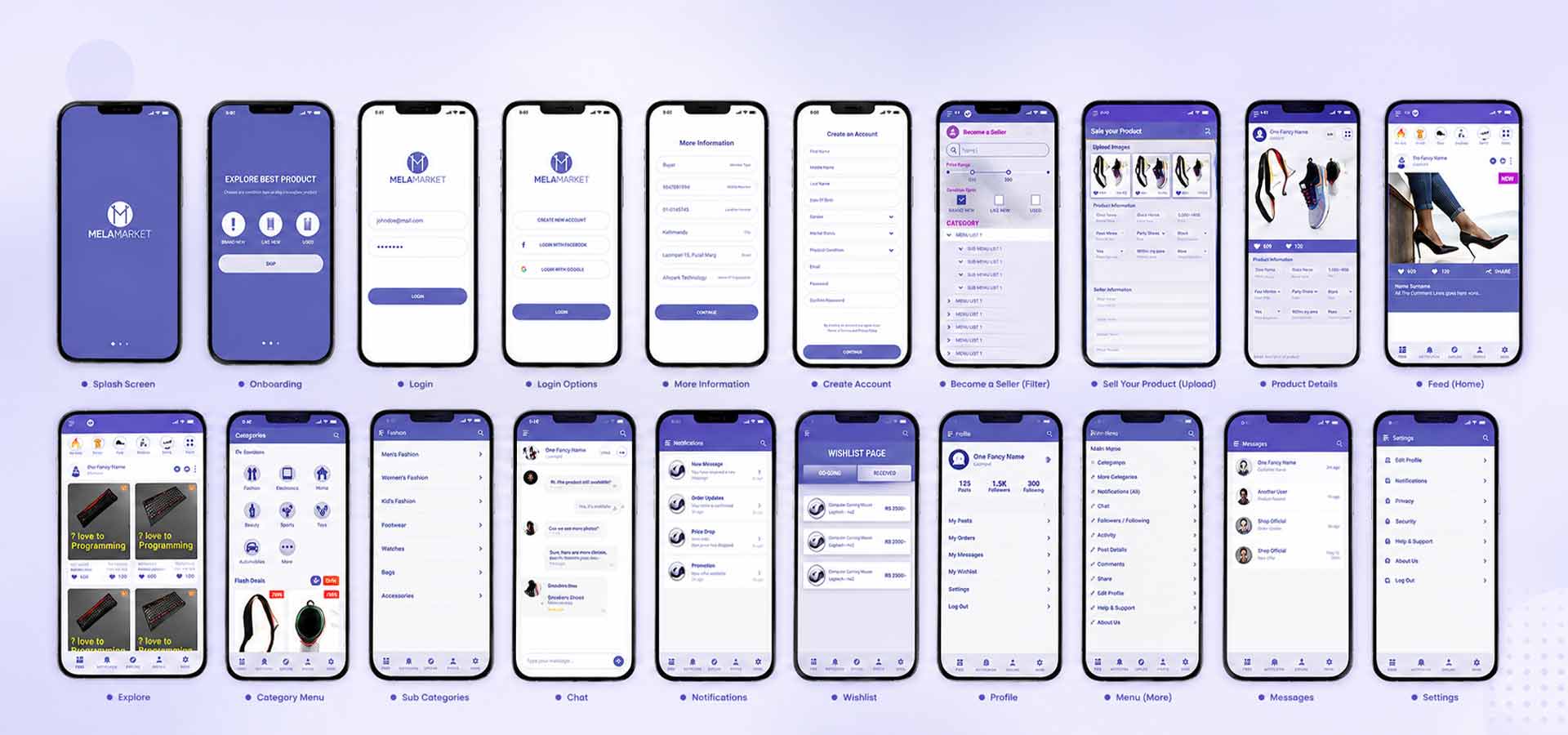
Users could list products they wanted to sell, discover products from other users and businesses, interact with listings, and communicate publicly through comments.
At the same time, the platform needed to support a sustainable business model through paid product promotion and advertising.
The Product Ecosystem
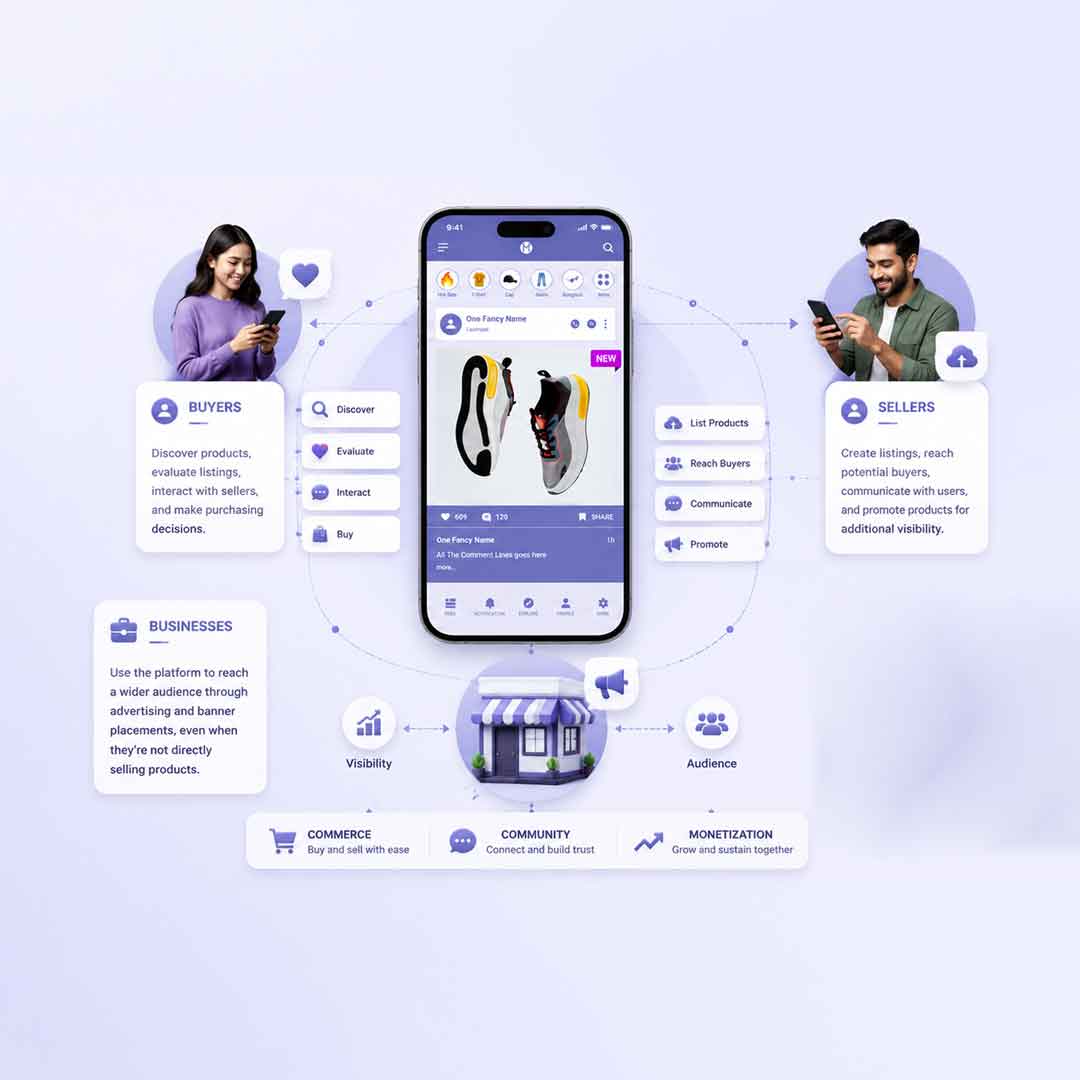
The platform had to serve more than one type of user.
Buyer
Discover products, evaluate listings, interact with sellers, and make purchasing decisions.
Seller
Create listings, reach potential buyers, communicate with users, and promote products for additional visibility.
Businesses
Use the platform to reach a wider audience through advertising and banner placements, even when they weren't directly selling products.
The Challenge
How can commerce, community, and monetization coexist without making the experience feel complicated?
Designing one marketplace experience that could balance commerce, community, and business goals—while keeping the experience simple and intuitive.
Multiple users:
Buyers, sellers, and businesses had different goals.
Complex ecosystem:
Products, profiles, comments, sellers, promotions, and advertising needed to connect naturally.
Commerce + community:
The experience had to support both transactions and social interaction.
Monetization:
Advertising and promoted listings needed to create business value without disrupting the user experience.
Design Process From Structure to Interface
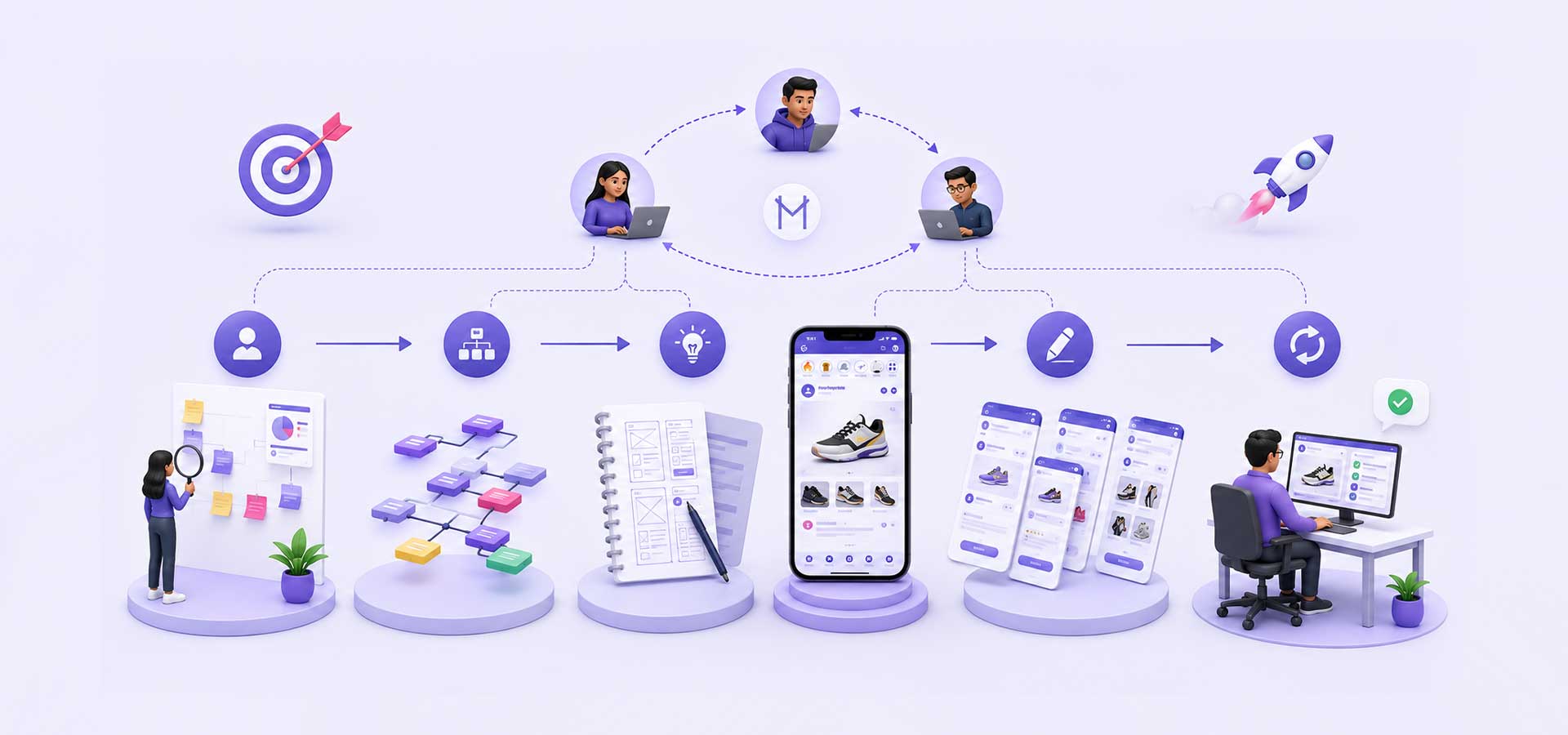
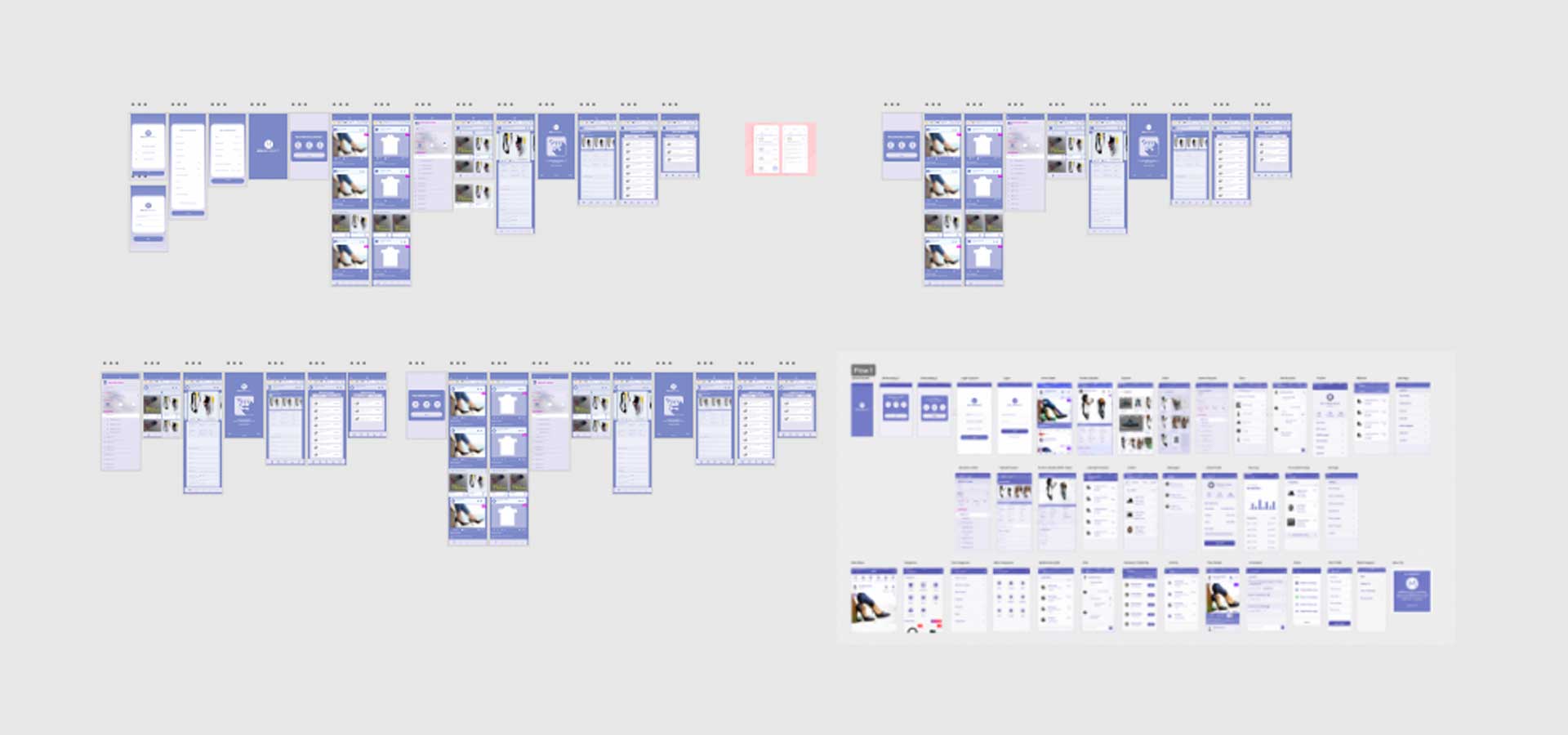
The project moved at a fast pace, requiring close collaboration between product, design, and development. I worked across multiple areas of the product rather than focusing on a single interface.
Understand
Identify user and product requirements.
Structure
Define information architecture and relationships.
Explore
Develop different interface approaches.
Design
Translate flows and requirements into UI.
Refine
Review, iterate, and align with the wider product.
Information Architecture
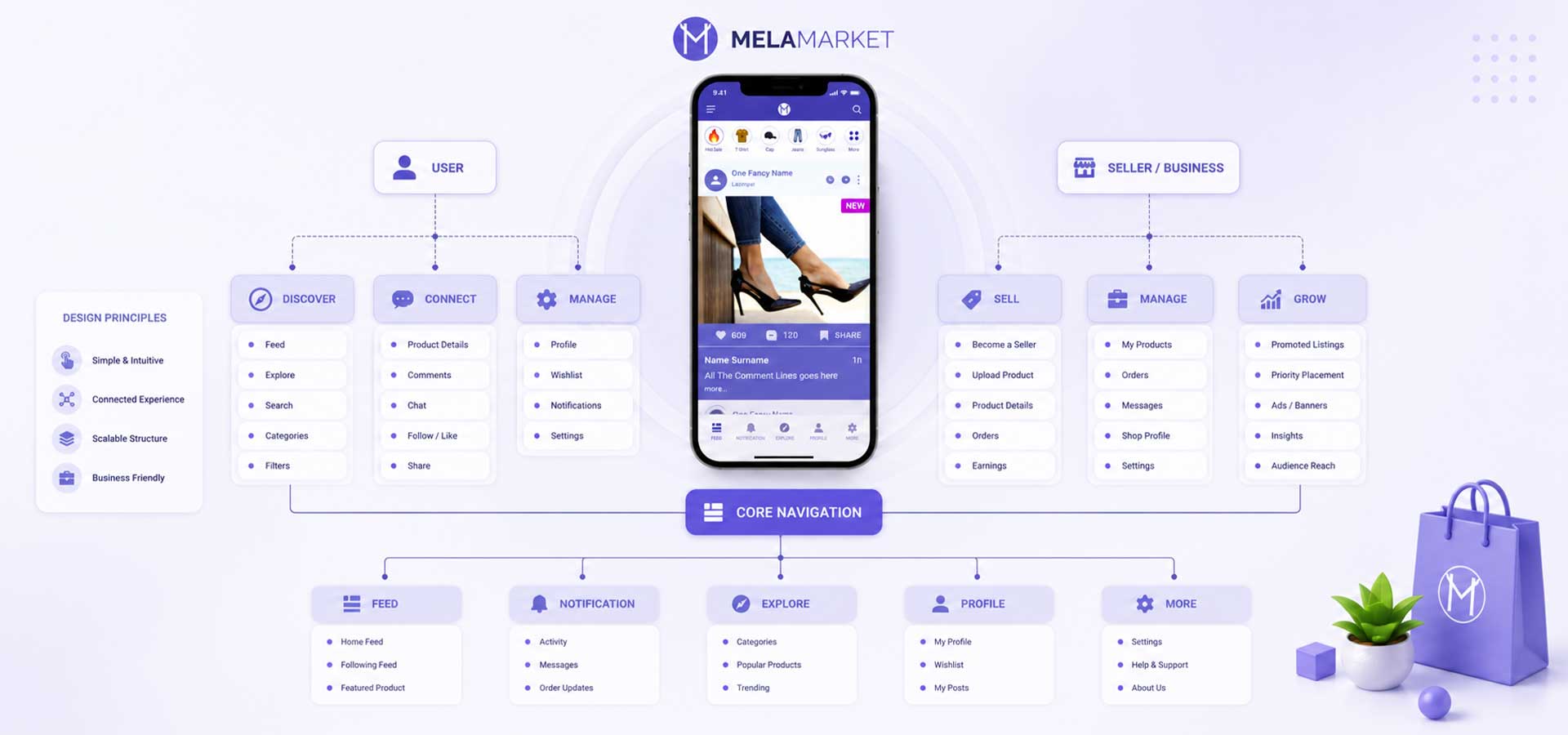
Mela Mart’s Information Architecture was built around user goals rather than internal business functions.
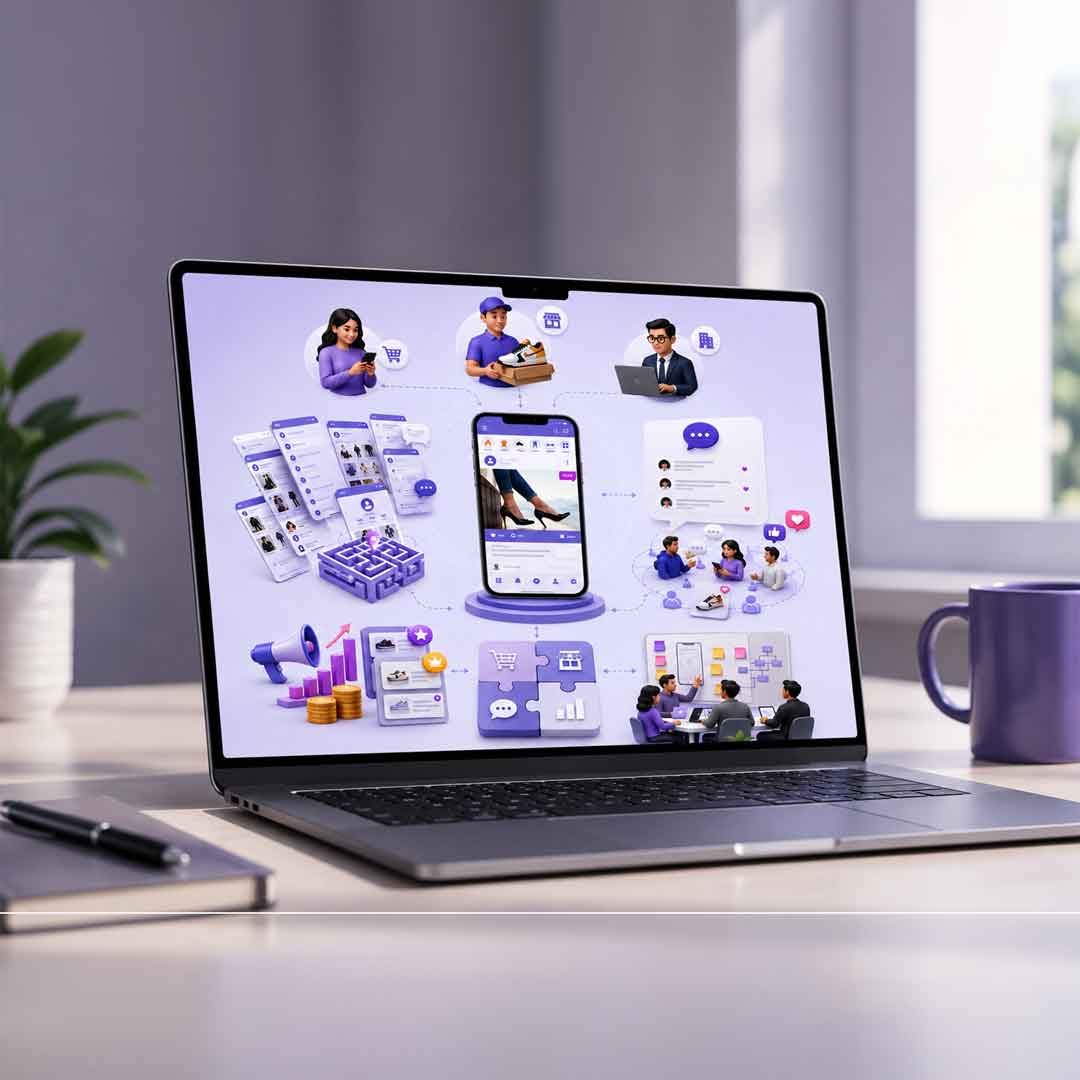
The structure connected discovery, categories, search, product listings, product details, profiles, posting, comments, seller information, promotions, advertising, notifications, and account management into one ecosystem allowing users to move naturally from discovering a product to evaluating, interacting, connecting, and eventually buying.
Monetization
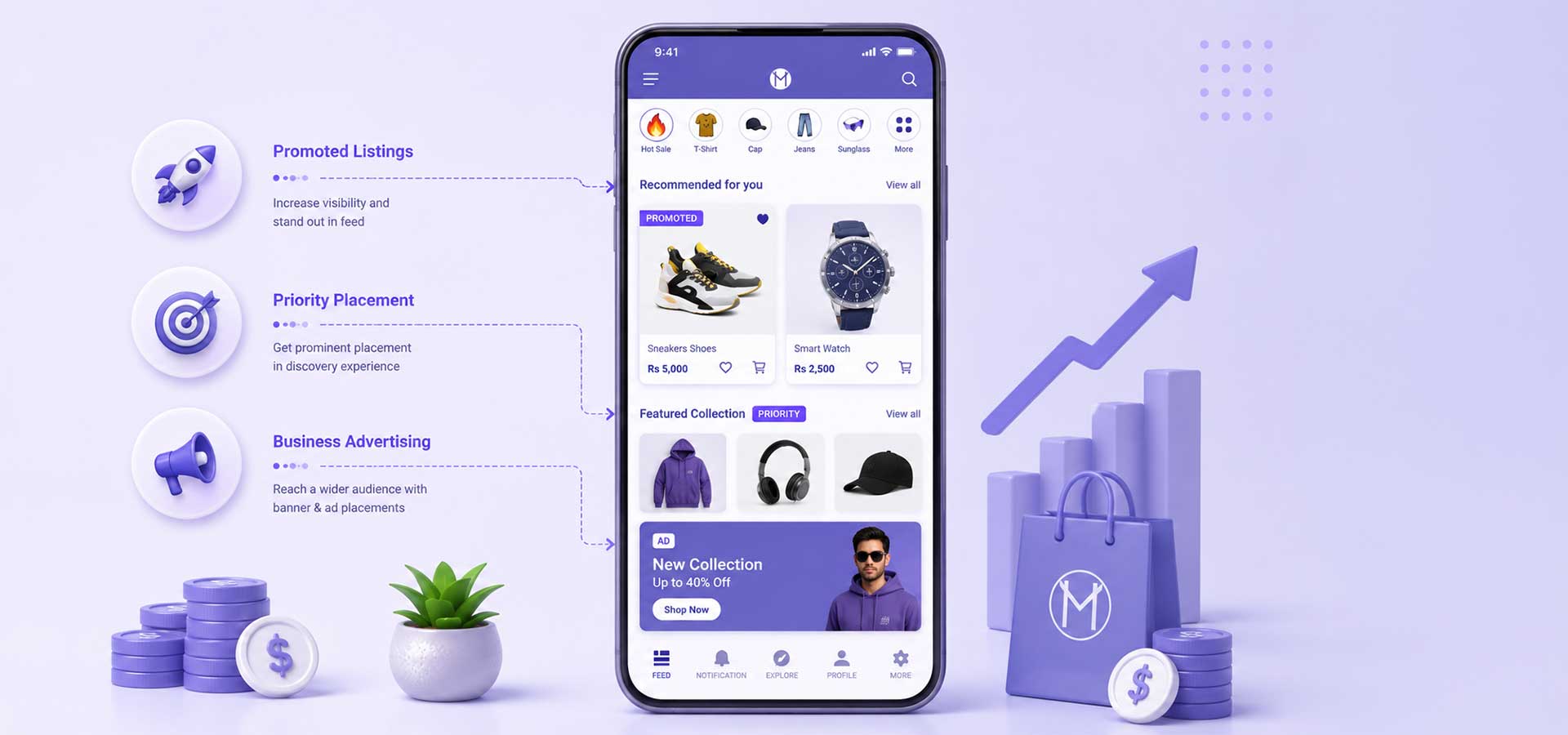
Designing Business Opportunities Into the Experience. The platform's business model included multiple ways to generate revenue.
Promoted Listing
Sellers could pay to increase the visibility of their products.
Priority Placement
Products could receive prominent placement within the discovery experience, helping sellers reach users more effectively.
Business Advertising
Businesses that didn't necessarily sell products through the platform could use banner and advertising placements to reach the platform's wider audience.
The design challenge was clear:
Monetization should create value for the business without reducing value for the user.
Advertising and promotional opportunities therefore needed to feel integrated into the marketplace rather than interrupting it.
Outcome
The product brought together three interconnected experiences:
Marketplace
People could buy and sell used and pre-owned products.
Community
Users could interact and communicate around listings.
Business
Sellers and businesses could pay for increased visibility and advertising opportunities.
Together, these created a marketplace ecosystem designed around both user participation and business sustainability.
Reflection
This project remains meaningful to me because of both the product and the people behind it. From a design perspective, it taught me how important information architecture becomes when a product contains multiple user types, business models, and interaction patterns.But the bigger lesson came from the team.
Working within a fast-moving environment showed me that great products aren't created by individual contributors working separately. They emerge when people communicate, challenge ideas, share responsibility, and help each other move forward.
The project also became an important step in my growth as a leader. I entered the project focused primarily on design. I left with a deeper understanding of collaboration, ownership, teamwork, and leadership.